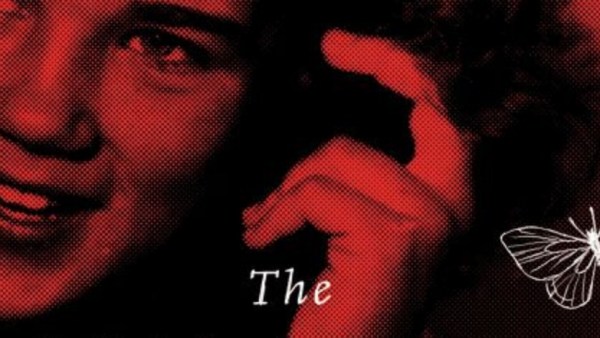
Released in 1976 and 1977, with the
marginal movements of punk and disco revolutionizing popular music, Kate and
Anna McGarrigle's Kate & Anna
McGarrigle and Dancer With Bruised Knees are cult records. The
McGarrigles were folkies who will never become iconic the way the Ramones and Saturday Night Fever soon did. But
neither were they obscure: when Kate died of cancer early last year, the
tributes flooded in like she was Marlene Dietrich. It helped that Kate's son
with Loudon Wainwright III, Rufus Wainwright, is more renowned than either of
his parents. It also helped that the McGarrigles hailed from Canada, which
promotes its artists like the national assets they are. But the main reason is
the two albums themselves. Cult records they are. Classics they also are.
Though the McGarrigles ended up recording less music
than I'd hoped in 1976, there's enough, and most of it will endure. But the
first two albums are indelible—since 1980, I've revisited them more often than
any of my punk-era faves except maybe Rocket
to Russia. In part it's the material,
in part something subtler, as came clear when I somewhat apprehensively
test-played the bonus disc of Tell My
Sister, Nonesuch's handsome,
economical reissue of the two classics. Only Dylanologists and smitten fanboys
need the detritus that fills most bonus discs. But that wasn't how this one
felt even though half of its 21 songs were also available on the two
accompanying albums—in what must be, given how I've been raving, definitive
interpretations. I appreciated the previously unheard material, especially a
lost masterpiece about the almost carefree pleasures of a hippie summer called
"Saratoga Summer Song." But mostly the bonus disc succeeds for the
same reasons I'm always introjecting these records into my musically
oversaturated home life.
I've called the McGarrigles folkies, a mildly belittling
characterization that seems fairer than ever now that I've read the Dane Lanken
coffee-table book Kate and Anna
McGarrigle: Songs and Stories, which I liked so much that my wife bought me one for
my birthday. But as is invariably pointed out, Kate and Anna were domestic
folkies. They made piano-and-accordion music not guitar music, parlor music not
campfire music, stay-at-home music not on-the-road music; rather than pretty or
gorgeous or powerful, their voices were just beautiful, in a proudly plain way.
Products of a household where
everybody sang, they meshed perfectly with the give-and-take sociability of
chopping vegetables and reading in bed.
Produced by the astute folk-rock impresario Joe Boyd,
the McGarrigles' classic albums built a bridge between Canada and California,
where folk music had been profitably homogenized by the likes of Jackson Browne
and Linda Ronstadt, who named her 1974 breakthrough album after Anna's
"Heart Like a Wheel." From the the debut's opening track, Kate's
"Kiss and Say Goodbye," Boyd goes for a more casual feel than Peter
Asher could have countenanced for Ronstadt—Steve Gadd pokey, Bobby Keys
laid-back. Nevertheless, parlors seldom come equipped with trap sets and
saxophone honchos, and when a full band and Anna's harmonies rev up around
Kate's ebullient "And I don't know where it's coming from/But I want to
kiss you till my mouth gets numb," we who love this record recognize a representation of the casual—and the
ecstatic. The bonus-disc demo is very different—solo with clunkier piano, only
then toward the climax Anna's harmonies sidle in, and soon a guitar is quietly
kibitzing. The song is so good, as I know because Boyd softened me up, that
right now I prefer the bare-bones conversation of this truly living-room
version (which was recorded in a studio).
I understand why most McGarrigles fans swear by the
debut, which listens easy without ever going soft or making room for a merely
good song. Topping even Anna's "My Town" and "Heart Like a
Wheel" and her own "(Talk to Me of) Mendocino" and "Tell My
Sister," Kate's Loudon farewell
"Go Leave," taken solo with guitar, is regarded by some
sachems of sorrow as the most bereft breakup song ever recorded; although it's
perfectly written—the disarming six-word opening, the enjambed "aching"-"breaking,"
the intrusion of the blunt "stalling" three lines from the end—quoting
even a couplet would do a disservice to its power as music. Nevertheless, my
own beloved has always been Dancer With
Bruised Knees, where the McGarrigles perfected their aesthetic. Although a
few of the debut's Stateside session heavies reappear, most of the music comes
from the evolving crew of Montreal folkies the sisters started hanging with as
teenagers. These include Dawson College philosophy prof Chaim Tannenbaum on
harmonica, mandolin, recorder, and backing vocals as well as trumpeter-vocalist
Dane Lanken, a journalist already encountered above as an author and thought of
by many as Mr. Anna McGarrigle.
What I love so hard about this
lovely, homely album is that it doesn't listen so easy. It risks an austerity
that rings as true in eat-the-poor 2011 as it did in high-punk 1977. Its
melodies run deeper, its beats are less swinging even with jazzmen on five
tracks, and it risks the cognitive dissonance of three songs in French that
won't sound so quaint to Anglophones who work out the translations. Admittedly,
I'm a fool for Kate's "Walking Song," about taking a stroll with your
life's companion, which my wife and I have been putting on each other's mixtapes
since I turned 40, and for "First Born," about a privileged kind of
son who could be Rufus, Loudon, or even me. But my thematic preferences don't
stop me from admiring how the album ends with two songs about circling back to
zero without your life's companion, one by Anna called "Kitty Come
Home" and one by Kitty herself.
Kate was the motivator, declares Anna, born 14 months
earlier on December 4, 1944. Kate taught herself banjo and blues; Kate set out
for New York with a singing partner who ended up producing Laurie Anderson;
Kate made away with Loudon Wainwright's fickle heart; Kate urged her big sister
to write songs because she needed the material. Without Kate, Anna swears,
she's retiring. And though I hope she keeps writing, there's common sense to
this pledge, not because Kate's somewhat fuller voice and bigger songs rendered
her musically dominant, as to some slight extent they did, but because if Anna
had died first, Kate would have been hard-pressed to go on alone as well.
Their signature trick, after all, was that singular
synthesis of timbre and intonation, nature and nurture, that has raised up the
harmony of so many siblings. But harmonizing families aren't all alike—consanguinity
didn't help the Osmonds much. The McGarrigles were blessed in addition by their
long immersion in the Celtic mysteries of French-Canadian song and the
contrarian intelligence of their eccentric close harmonies. This intelligence
also inflected the physical cast of their voices. They're female, and Anna's
voice especially has a courageous fragility about it, so their male admirers
can't resist calling them sweet. But to me they always seemed tart, sharp, wry,
nearly prim. They seemed sexier that way, too.
Which brings us, by the back door, to the even bigger
reason the sisters needed each other artistically: to complete their domestic
arrangement, which combined two radically different households and spanned four
generations. Lanken outlines a childhood in which both grandfathers were
music-mad, one as an impresario-performer and the other as a fan. Musicales at
their childhood home in the modest ski town of Saint-Sauveur featured Stephen
Foster, pre-WWI chestnuts from a songbook Kate committed to memory, 13 senior
Francophone siblings with their own specialty numbers, and not two but three
singing McGarrigle sisters—the eldest, Jane, produced the duo's fifth album and
has joined in occasionally onstage. But then Kate and Anna's parents took an
apartment in Montreal, and soon the two sisters had joined a shifting folkie
ménage. Locally renowned as the Mountain City Four even though there were
sometimes eight of them, this collective went worldwide on Dancer With Bruised Knees.
The McGarrigles were younger than most of their cohort,
and female in the pre-feminist bohemia of 1962, when women weren't supposed to
know blues like Kate or even paint in a garret like Anna. Yet long before their
fame they were anything but marginal in their little community, which migrated
from living room to living room, including one in Saint-Sauveur. Most of this I
know from Lanken, who narrates via text and caption until Kate and Anna start
getting serious press in 1976, at which point Songs and Stories turns into a generous clip file augmented by many
more captions (the snapshots are exquisite throughout). But left out of this
scrapbook is a piece I love from Ms.
magazine. Poetically, it was written by my own sister, Georgia Christgau, and
it examines ideas of family—as do the transcriptions of unpublished interviews
with the sisters and their mother that Georgia miraculously dug out of her
files when I solicited her recollections.
Interviewed separately, Kate and Anna each applied the
word "incestuous" to their crew, and they weren't just being
metaphorical; Kate told Georgia that Dane was the only man at a recent
get-together that she'd never made love with—and that love was invariably
involved. Anyone who thought "I want to kiss you till my mouth gets
numb" was not imagery one ordinarily associates with parlor music should
understand that this was no ordinary parlor. I believe Kate about the love
part—by then she'd known these people 15 years, time to love quite a few fellow
spirits if you're young enough. In her account, those affairs were in the past,
and far from generating the resentments and rivalries you might suspect, they
instead guaranteed her an extra portion of the "love and concern"
Anna promised in "Kitty Come Home." Georgia, who found herself
pouring out her life story the day she hit Montreal, concluded that "intimacy
is all Kate and Anna are really comfortable with."
The McGarrigles were at home in
an exceptionally complex domestic arrangement that melded a traditional
extended family of amateur musicians with a floating post-'60s collective of
semi-professional ones. Either formation had the makings of a minefield riddled
with repression or one-upmanship. But the McGarrigles' formations avoided such
perils. They allowed you to feel what you felt and tolerated your mistakes when
you were proving what you had to prove. It was a perfect environment for
intimacy, meaning not just candor but all the improvements on the low-concept
"heartfelt" and "natural" that surface in the appreciations
Lanken has assembled: "civilizing," "strangely unsentimental,"
"translucently undramatic," "unselfconsciously reflective,"
"poignant and playful," "temperate, forthright and
cheerful."
What none of this richly deserved praise suggests—though
it's hardly a secret: the title song of the album Jane produced, Love Over and Over, makes a point of it—is that
neither Anna with her long, private marriage nor Kate with her foreshortened,
defining one has ever written a love song. I don't mean a heartbreak song—Kate & Anna McGarrigle is among
other things a heartbreak album. Nor do I mean a sex song—Kate's begin with
"Kiss and Say Goodbye," in which the goodbye has the last word, and
culminate with "Talk About It," a 50-year-old's invitation to bed
that promises, "We can talk about it in the morning/It'll come/It always
does." There are even mother love songs, crowned by Kate's translucent
"Babies if I Didn't Have You." Appreciations of their life's
companion, no. Appreciations of their month's companion, ditto.
Although some of the McGarrigles' more
benighted admirers consider this a virtue, it's clearly a failing, one as conducive
to cult status as their acuity and reserve. But given their strange
unsentimentality, it's a forgivable failing, because as anybody knows, it's
easier to write a credible heartbreak song than a credible heart song. Anyway,
there's a major exception, one so unsentimental you can forget it's there: the
aforementioned "Walking Song." It's wistful, imagined—Kate's vision
of a Loudon, let's just say, ready to spend days hiking and talking, hopefully
in Canada but Mexico would do. "Be my lover or be my friend," she
proposes, or implores. This was an early song, and the available evidence
suggests she never got her wish. So together with her sister she completed a
circle of love that served as a substitute. And together with her sister she
gave it to us. That's love too. In a way, all the McGarrigles' songs are love
songs.