Perhaps it's the onset of fall, and the twinges
of research and studiousness that blow in with cooler air, but I find my
thoughts lately returning to historical poetry. I've
been wondering how poetry can conjure the past, and what poems do with that
summoning power. This summer on one chapter of an occasional quest to read
through Shakespeare, I enmeshed myself in his
youthful, not-always entertaining Henry VI trilogy.
Frequently
dated as Shakespeare's earliest plays, they dramatize wars
in France that resulted in the burning of Joan of Arc; internal feuds that led
to the War of the Roses; and culminate in the rule of despot Richard III.
The
unfolding events plunge into a maelstrom of civil war, but also provoke us with
questions: Where, among the profusion of events chronicled, do we find the essence
of history? What deeds should we observe—the enormity of the conflict or the
tragic fates of individuals?
It's a question we can
always keep asking ourselves. Shakespeare, bound to the court, often dramatized
life by focusing on rulers, on their jostling, ambitious coterie.
By
contrast, American poets, in this court-less democracy, have been remaking
history for the common man almost as long as they've
been writing on this continent. Examining our upstart nation's history, they
often focus on what (and who) we are leaving out. One thinks of Muriel Rukeyser
documenting labor histories in verse, William Carlos Williams writing a paean
to Paterson, New Jersey, or Whitman and Melville writing versions of our own
Civil War. Whitman lovingly described the bodies of dying boys, even as he
claimed "The real war will never
get into books."
Whitman
hints at something that has preoccupied—and even tormented—American
poets ever since: the question of what can
and can't be said, what—and
who—our official histories exclude. American poetry that takes on "the
historical" is often preoccupied with margins
and remnants. In fact, the number of books
that work along these lines in recent years are staggering: Tyehimba Jess's
Leadbelly croons an early history
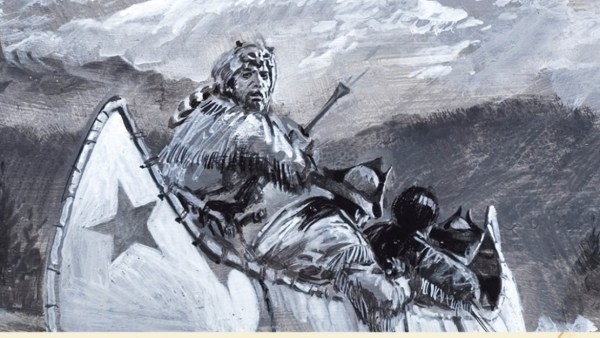
of the blues; Frank X. Walker's Buffalo
Dance revisits the journey of
Lewis and Clark from the perspective of York, Lewis's enslaved attendant;
Martha Collins's Blue Front retraces the history of
one horrifying lynching in Cairo, Illinois; Jill McDonough's 2008 Habeas Corpus crafts a sonnet for each
prisoner who has been executed in the history of American emprisonment. Natasha Trethewey's
Pulitzer Prize-winning Native Guard
interweaves
her own family history with the struggle of the black Mississippi soldiers who
fought for the North during the Civil War.
This
year offers its own crop of books that invite us into acts of common—or uncommon—remembrance. Approaching
Ice,
Elizabeth
Bradfield's
second book, traces two hundred years of Arctic Exploration, "ready
to be amazed… longing for it." Reminding us just how
recently we fumbling humans have reached the polar regions,
she uses ice, and the hunt to find the great magnetic north, as the ultimate
site that dramatizes both human quests and limitations. We, like
the early polar explorer John Cleves
Smith, move in lands where "sudden transformations"
are expected, pressing our "human face against the
frozen wall of what/ is known." At
once erotic and unnatural, scientific, and humane, the work presents a
beautiful and grim and threatened lexicon of ice and icebergs. Examining "the
age-old lust for places/ we pretend are free of consequence,"
Bradfield also reminds us of our ultimate limitation—mortality—and of the faint
human traces any of us, even the boldest, leave.
Camille
Dungy's
Suck on
the Marrow also begins on a field
of faint traces. It has to—it is talking about people history hasn't recorded, a painful chapter of American life in
which free and freed blacks were captured from the North and sold back into
slavery. Re-imagining these lives, Dungy offers us a haunting song cycle—a
drama no less well-plotted than a play's,
but one that emerges in snippets of imagined letters. These poems are not about
King anybody, but "Joseph Freeman,"
captured and sent South; his wife, Malinda, left to grieve without explanation,
and Molly and Shad, who brave love on a Virginia plantation. Dungy's verse
sings into absence, into places she's
envisioned out of newspaper marginalia. Here are the sobering words of "The
Trapper's Boast":
"Give me a crowd of
colored men and I can spot the new arrivals—/ freed men or fugitives—/ I can
tell them from those born with a claim to their flesh./… My mark is the colored man at ease with
his freedom."
At
the end, where notes would normally document research, Dungy plays with us
again—her references, to research and to her own hunt for information—are
themselves a poem that stresses the task of representing incompleteness.
Another
poetic document of
history's gaps, Jake Adam York's forthcoming
Persons Unknown narrates the author's
own hunt through Mississippi and Alabama for sites of the martyrdoms of the
Civil Rights era. His book is the second
installation of this project, written after a chilling debut, A Murmuration
of Starlings.
47 years after the
1963 church bombings in Mississippi killed four
small girls, York is hoping to write more hidden victims—of
lynching, of Civil Rights beatings— "back
into history."
Whether
reimagining a king or a forgotten murder victim, an explorer, a bystander in a
lynching, all such poetry implicitly asks: What role can poetry
play in common remembrance? What can it tell us about our own
humanity? Can this writing make the wrongs done
right? Can revisiting the site of a river that
swallowed a lynched man, staring into its glassy surface, serve as memorial?
In
Persons
Unknown, York's tortured answer
is both yes and no. He's
full of a paradoxical awareness of what's
been erased and a plea to remember more. And in some cases, York
argues that what we remember itself has to be imaginary. Standing
at the place where the body of Mack Charles Parker was recovered
from the Pearl River in 1959, York writes:
…
But here
only
the drinks are listening
as
Ervin rises, ghosting Handy's lead
and
even they cannot hear
how
the rivers heal their quiet
how
they fill their scars so perfectly
that
remember feels like forget.
Seeking
a cruelty that's
quite literally hidden in plain sight, a murder that lingers just below the
surface of our daily life, York asks us to remember
what we "cannot hear."
Suspended
in such a space, York upends neater histories, and even upends himself. "Walking
down the street he "catches that curve/ in a
window or a windshield/ that wrecks my face/ so for a moment/ I can mistake
myself/ for a redneck at the end of a joke."
The
speaker of these poems is no deformed despot—not a Richard-like murderous
traitor to his throne or country. But he is a troubled narrator, one who wants
to use the discord he feels within himself to stir the waters of the past, so
that individuals overwhelmed by history's
river don't get forgotten. He
tries to recapture a story that is and isn't
about him "with a memory/half my
own."
York, Dungy, and
Bradfield—no less than Whitman or Shakespeare—explore
what it means to remember in verse. In doing so, they're
taking part in an old tradition: after all, Clio, history's
muse, was the sister of Calliope and Erato, the muses of epic and lyric poetry.
All
were daughters of Mnemosyne, goddess of memory. As
our current poets struggle with what—or how, or who—to remember, they also mine
old rifts in history, helping at once to expose and to heal them.
At
their best, they also create new language for memory, upon which even the most
forgetful nation can draw.
Please sign in to add a comment on this article.