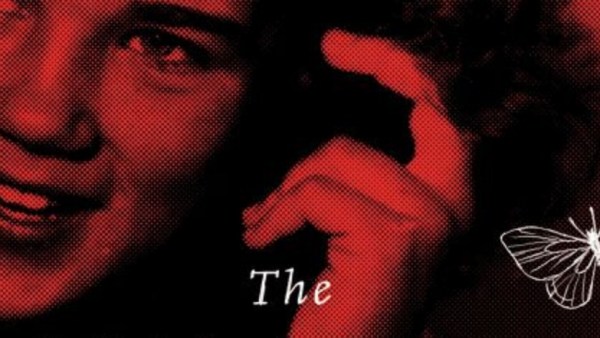
Edith Piaf, dead now for nearly
fifty years, has become one of France's great national monuments, as
lucratively exportable a product as Maurice Chevalier, Claude Monet, and Crêpes
Suzettes. Everyone here in America knows Piaf, or at least they know the
recordings of her two greatest hits—La
Vie en rose and Je ne regrette rien—delivered
in her yearning, metallic tones. Some even know the earlier numbers, chanson réaliste portraits, in the words
of one pop culture critic, "of working-class life, gray with the soot of
factory chimneys and abuzz with tunes picked up from bistrot radios." But
not many Americans were familiar with the singer's tempestuous and dramatic
life until the recent Olivier Dahan film, La
Môme (La Vie en Rose in the
United States) grabbed our attention, winning an Oscar for the lovely Marion
Cotillard and awakening a new mode
for all things Piaf.
The publication, now, of No Regrets: The Life of Edith Piaf by
veteran biographer Carolyn Burke reveals that far from having been a bit too
melodramatic (as I had thought La Vie en
Rose to be when it came out a
couple of years ago), the film omitted plenty. It almost had to: if even half
of the singer's myriad lovers had made it onto the screen, audiences would have
reeled in disbelief. Self-destructive stars of course are not unfamiliar to
Americans, and we have become almost inured to their excesses: as I write,
Charlie Sheen and Lindsay Lohan are playing out very public meltdowns. But the
epic mess of Piaf's love life, as well as the scale of her talent, make this
story something special, while her brutal Dickensian childhood virtually
ensured that she would spend her adult life in a doomed quest for perfect love
and security.
Burke has made a valiant effort to
sift through the exaggerations of Piaf's two memoirs, Au Bal de la Chance, (1958) and Ma
Vie (1964), and the self-serving lies dished up by Simone Berteaut, Piaf's
soul-sister and party-companion, in her own tell-all about the singer. The
unadorned truth is already bizarre enough, with no need of embellishment.
The singer was born Edith
Giovanna Gassion, in 1915—and not on the city pavement, as she claimed, but in
the Tenon Hospital in Belleville, a working-class area in eastern Paris. (Burke
imparts the remarkable fact that at that time, less than a century ago, the
now-noisome quartier was still
perfumed by the scent of blooming lilac.) Her father, Louis Gassion, was an
acrobat (just five feet tall, he passed on his diminutive form to his
daughter); her mother, Annetta, was a would-be singer whose own mother presided
over a flea circus. As if this background wasn't disreputable enough, the
feckless Annetta, an alcoholic and drug addict, abandoned the child when she
was still a baby and went on to pursue an independent singing career under the
name of Line Marsa. As in the vast majority of such cases, Edith never got over
this primal rejection.
Louis Gassion was slightly more
dependable. His own life was not stable enough to include a baby, so he took
Edith to live with his parents in the town of Bernay in Normandy. Her
grandmother, known as Maman Tine, was the manageress of what was
euphemistically known as a maison de tolérance,
essentially a whorehouse with legal standing. Petted by the unmarried
"filles" of the establishment, Edith had a strange childhood,
but one that was not without love, Occasionally
her grandparents would take her to the Café de la Gare where they would stand
the child on a table and let her sing to the assorted company. The power of her
voice was already notable.
When Edith reached the age of
seven her father thought her old enough to become a professional asset, and he
reclaimed her from his parents to take her on the road: the child would sing as
a part of his circus act, the two of them traveling with a series of
lady-friends who attached themselves to Louis. "From her father,"
writes Burke, "she learned an entertainer's sense of timing, techniques
for tugging on the audience's heartstrings, and the sort of patter likely to
produce a good take." Some time during Edith's adolescence she returned
with her father to Paris, where she began singing in cafes as well as in the
streets—and eventually in clubs as well, performing the chanson réaliste material that was being popularized at the time. Burke writes, "It was said of the best
interpreters of this tradition—Fréhel, Damia, and soon Piaf herself—that they
sang the way they lived, their songs came from the heart. (The extent to which
they consciously sustained this perception went unnoticed.)"
The teenaged Edith kept louche
company in Pigalle, where she now settled—if indeed "settled" can be
said to be the right word. There she took up with Simone Berteaut, "Momone":
a wayward fourteen-year-old girl whom Edith dubbed "ma mauvause génie," "my evil spirit." Over the
decades Momone would be banished by countless men who tried to reform Piaf,
only to be called back by the singer whenever she once again found herself
alone. And almost inevitably the teenaged Edith got mixed up with le milieu, the mafia that ran much of
Paris's club and cabaret scene. During these years she usually had one or
another "protector," some thug who made sure she was always
incriminated in his felonies and helped himself to her meager wages. As Burke
points out, "her life with her father had predisposed her to having a boss
who took her earnings and dictated her behavior." At the age of seventeen
she had given birth to a baby girl, Marcelle, known as Cécelle. For a while the
baby lived in digs with Edith and Momone, but soon the father came and took her
away, saying that if she wanted the child she must come home. In a haunting
reenactment of her own childhood tragedy she refused to do so, though she paid
for the baby's care. Not long afterwards, the two-year-old was dead of
meningitis; Edith, so the story goes, slept with a man to earn the money for
the burial. The loss continued to haunt Piaf; she was never to have another
child.
At the age of nineteen Edith was "discovered"
by Louis Leplée, proprietor of the club Le Gerny—a swank establishment by Edith's
standards. It was Leplée who picked out the simple black dress that would
become her uniform for the remainder of her career, dubbed her "Piaf"—sparrow—and
selected a réaliste repertoire of
songs about the "dangerous" classes from which she sprang, works that
would come to define her. Other early
mentors were the author Jacques Bourgeat, who urged her to educate herself, and
the lyricist Raymond Asso, who became her lover, some say her Svengali. Piaf
herself credited Asso with saving her life. "It took him three years to
cure me. Three years of patient affection to teach me that there was another
world beyond that of prostitutes and pimps. Three years to cure me of Pigalle,
of my chaotic childhood…to become a woman and a star instead of a phenomenon
with a voice that people listened to as if being shown a rare animal at a fair."
Asso also introduced her to the composer Marguerite Monnot, the woman who would
become a close friend and her most important collaborator: Monnot's talent, she
said, was "what helped me to be Edith Piaf."
Piaf's ascent was rapid at this
point. Her next lover, Paul Meurisse, brought her to live with him in the beaux quartiers near the Arc de Triomphe
and she never looked back: from then on, and as her fees reached stratospheric
heights, she spent freely on high living in swell neighborhoods. Her entourage
continued to expand: there were a few true friends among the crowd, but
increasingly it was, in the words of one observer, "abject beings, people
who amused her, pilferers, spongers, those who took her money—a concept that
simply didn't matter to her."
As for her many amours, there is probably no way they
could be counted up, and Burke doesn't even make the attempt. Among the more
significant were the composer Norbert Glanzburg, the very young Yves Montand,
whose career Piaf actively promoted, movie star John Garfield, performer Eddie
Constantine, bicycle champion André Pousse, singer Jacques Pills (a genial
fellow to whom she was briefly married), lyricist Jo Moustaki (author, with
Monnot, of Piaf's great song "Milord"),
and the gorgeous Théophanos Lamboukas, gay and twenty years Piaf's junior, whom
she married at a moment when "her romanticism won out over her sense of
the ridiculous." The great love of her life, in her own opinion, was the
boxing champion Marcel Cerdan, who died tragically in a plane crash in 1949 at the height of their romance. But considering
Piaf's track record, Momone's cynical comment on the subject might not have
been too far off: "If it had gone on another year," opined Piaf's mauvaise génie, "she might have
dismissed him, like all the others." For Piaf made impossible demands on
her lovers, many of whom (including Cerdan) were already married, and
eventually either they burned out or she did. Her desire for love was insatiable,
impossible; she simply asked too much of it.
Of course it was this yearning
that permeated her voice and immortalized it. As one collaborator, the lyricist
Henri Contet, put it, "Words and music are her beloved slaves. Miraculously
they submit because of her passion. She loves them as much as the earth loves
rain….She sleeps with her songs, she warms them, she clasps them to her….They
possess her." During the triumphant years of her apotheosis she tore the
heart out of her listeners: there are still people who remember the bliss of
hearing her at the Versailles Club in New York just after World War II, when
she seemed to embody a resurgent France. In later years, after Cerdan's death,
she battled countless health issues and drug dependencies, but managed, right
up to the end, to gear herself up to go on stage. Her great concert at the
Olympia in Paris in 1960, at which Je ne
regrette rien was introduced along with other songs by her new favorite
songwriter, Charles Dumont, was a triumph of the will; only months before she
had seemed on the brink of death.
Piaf's untimely death, in 1963 when
she was only forty-eight, occurred at a seminal moment in the history of
popular music. Only a few months earlier the Beatles had leapt to international
attention. In France, rock music was quickly elbowing aside the chanson tradition, though that tradition
showed significant staying power: the new girl on the block was Juliette Gréco,
with her existentialist chic, and Georges Brassens and Jacques Brel were drawing
crowds in Paris clubs. Piaf may not now seem to have been a progenitor of rock,
but French rockers have claimed her as their own, and Johnny Hallyday, now the eminence grise of French rock, has
eagerly acknowledged her influence on his generation, "the young French
singers who absorbed her powerful emotional style even when it seemed at odds
with rhythms inspired by American rock, jazz, and blues." It is that
powerful emotional style that grabbed listeners all over the world—for in the
end, as Burke concludes, Piaf's greatest love affair was with her audience.
Please sign in to add a comment on this article.