The Death-Ray

Once, during an interview conducted by Tom Disch, the novelist John Crowley made a notable observation. When asked what he esteemed as his best book, Crowley declined to pick a favorite. But he did note that in any creator's career, the artist will probably do his or her best work at the midpoint, neither at the start nor the end of their powers.


Right now Daniel Clowes is voyaging through the prolonged and impressive midpoint of his own career, an era which began with Ghost World in 1997 and shows no sign of diminishing. Everything he produces at this juncture is rich with mastery, fertile with invention, and stamped with his ineffable individual touch. You cannot go wrong by picking up any of his latest offerings, from Mr. Wonderful to Wilson. In these books you will find formalistic innovation in the graphical novel medium, deft storytelling, and a worldview that is as bracingly bleak as any weltanschauung expressed by some hi-falutin', beret-wearing, Gitanes-smoking French existentialist. (This comparison deliberately involving a stock character Clowes would delight in depicting.)


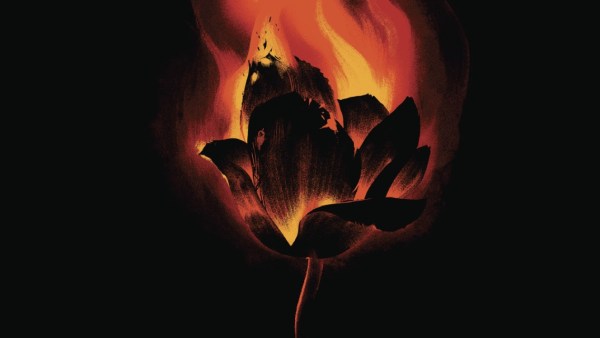
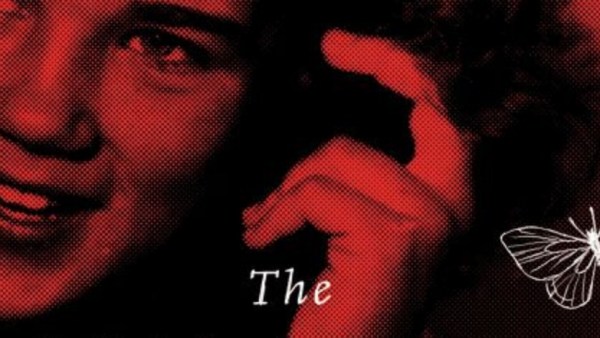
The Death-Ray originally appeared in 2004 as issue number 23 of Clowes's periodical comic Eightball. Limited in availability and impact by this format, the story has been rescued by current publication as a luxuriously oversized hardcover. The original comic was also outsized, but the gorgeous artwork really has a chance to shine in this fresh manifestation. Additionally, Clowes provides great new endpapers, and even the doublepage spread of copyright info embodies fine new illustrations.


We open in the year 2004 with a rather quotidian monologue from a mysterious middle-aged sad sack named Andy. He seems to be concealing something unusual about himself, however. The majority of the book will reveal Andy's secrets though extended flashbacks to his teenaged and young adult years, before the narrative returns to the mature Andy and leaves us with the enigma of his future.


Adolescent Andy is a wimpy loner and loser, too sensitive and unmotivated for the bone-headed, competitive 1970s high-school environment in which he's trapped. Befriended only by a similar, if more rebellious and irascible kid named Louie (recalling the pairing of Enid and Rebecca in Ghost World), Andy seems destined for featureless misery until he can escape. But then he smokes his first cigarette and miraculously ascends to an access of superhuman powers. It turns out that his scientist father, now deceased, endowed Andy with these latent nicotine-triggered abilities. And, moreover, has also crafted a raygun of deadly power as Andy's legacy.


Of course, Andy handles this endowment about as well or as badly as any other average teen who has read too many superhero comics would, resulting in tragedy all around. But the greatest tragedy happens to Andy himself, for his entire life is blighted by this "gift." Dare we read into Andy's fate a parable of how any creative soul is estranged from humanity by his talents? That's one allegory, but not even the dominant one, in the face of Andy's very specific car crash of a life, which is fleshed out in brilliant detail.


Clowes tells his story in discrete, discontinuous segments, a method he would later employ in Wilson. This staccato, bricolage narration keeps the reader in suspense more than a strictly continuous and linear storyline would. Likewise, the artwork leaps about in unpredictable protean playfulness. Consider, for instance, page seven, which is a pinup of Andy's remote, quondam girlfriend Dusty, companioned with a block of text representing a recent letter sent to her by Andy. It's simultaneously a frozen quiet moment (the text), and also a living snapshot (Dusty singing with a garden hose as microphone). Practically every single page displays comparable virtuosity and ingenuity.


Clowes's simultaneous affection and disdain for the pop culture and fashions and consumerism of this and past eras is always on display. He has a sure eye and hand for parsing the junk that fills our lives, evoking a kitchen table or stoner hairstyle that says more than any amount of wordage could. The world he depicts is both instantly familiar and yet oddly radiant for being limned so precisely.


Like Charles Burns and Chris Ware, Clowes masterfully depicts the lives of characters who are both average and yet as majestically tragic as any Greek or Shakespearean stumblebum.


The Speculator

Paul Di Filippo's column The Speculator appears monthly in the Barnes & Noble Review.  He is the author of several acclaimed novels and story collections, including Fractal Paisleys, Little Doors, Neutrino Drag, and Fuzzy Dice.

May 23: Girolamo Savonarola was hanged on this day in 1498 and then incinerated in the same piazza in which the citizens of Florence had earlier attended more than one "bonfire of the vanities." George Eliot's 1863 novel Romola,

advertisement
Books CDs, DVDs to know about now
Paris, I Love You but You're Bringing Me Down

When a job at a French ad agency landed in his lap, novelist Rosecrans Baldwin had the chance to fulfill a lifelong dream of living la vie Parisienne. And though cold réalité  -- in the form of financial struggles and an office culture where his rudimentary Francais didn't quite cut the mustard -- intruded, the result was a more mature take on the city of his fantasies, flaws included.

Why Cats Land on Their Feet

The feline acrobatics and other mysteries of everyday physics that Mark Levi explores in this charming book are just the beginning. A fun and enlightening workout for your gray matter.

Dead Men

Scott's doomed Antartic expedition and the haunting mysteries surrounding its failure lead to obsession in Richard Pierce's debut novel. As painter Birdie Bowers pursues her fascination with the explorer and his death, she risks both her body and her heart for answers.