Other Presidents

In celebration of Presidents' Day, some books that take readers beyond Washington and Lincoln.


The Last Founding Father:
James Monroe and a Nation's Call to Greatness

By Harlow Giles Unger


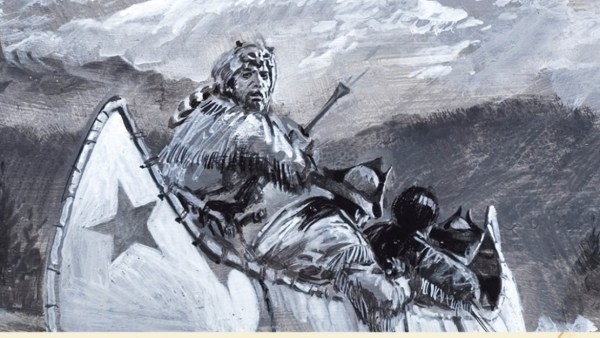
America's fifth president is remembered in part for his role in the maintenance of the "Era of Good Feelings"—a period of respite from clashes between the early partisans in national politics—and even more for his promulgation of the Monroe Doctrine, giving notice to European powers that both Americas were off-limits to their interference. Harlow Giles Unger expands the frame to include his subject's heroic military service in the Revolutionary War, his key roles as a foreign diplomat, and his near-assumption of Presidential authority as Secretary of War during the 1812 conflict with Britain. Not least is Monroe's relationship with his formidable wife, Elizabeth, a partnership reminiscent of the more well-known marriage of John and Abigail Adams.


A Country of Vast Designs:
James K. Polk, the Mexican War and the
Conquest of the American Continen...

By Robert W. Merry


Elected in 1844, James K. Polk—the "Napoleon of the Stump"—was at the time the youngest man ever to take office as President of the United States (he was a dewy 49 years old). A champion of the notion of Manifest Destiny, he led the nation into war to wrest California and much of the modern southwest from Mexico. Viewing Polk's administration through the lens of press clippings and the congressional debates of the period, journalist and historian Robert W. Merry argues that, though we might look askance at those policies today, Polk's countrymen saw America's territorial expansion and rise to continental power as a foregone conclusion.


1920: The Year of the Six Presidents

By David Pietrusza


As David Pietrusza points out, the Presidential election of 1920 involved five living men who had already occupied or would occupy the White House: the outgoing President Woodrow Wilson, Warren Harding (who won the election but would die in office), Calvin Coolidge (Harding's veep and successor), Herbert Hoover, and Franklin Delano Roosevelt. The sixth President of the title is Teddy Roosevelt, whose large shadow fell across the campaign despite the fact he had died in 1919. In addition to the concentration of historic names, Pietrusza offers a lively chronicle of a country emerging from World War I into a precarious and heady sense of 20th-century possibility.


Truman

By David McCullough


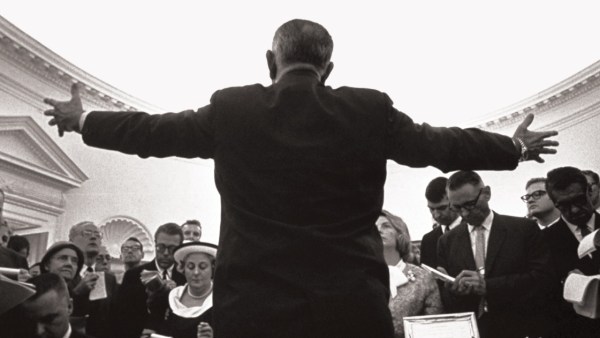
The Surprise President. Nobody thought that FDR's third V.P., a plainspoken Missouri politician, would be anything other than a caretaker following Roosevelt's death just months after winning a fourth term. But Harry Truman proved otherwise, concluding the war with Japan, working to found the United Nations, and establishing the Marshall Plan to rebuild Europe. Truman also ended racial segregation in the armed forces, and beat the odds and political pundits to upset Thomas Dewey in the 1948 elections (hence the famous erroneous headline). McCullough's Pulitzer-winning biography gives this apparently simple man the complex treatment he deserves.


Memories of the Ford Administration 

By John Updike


Don't let the title of John Updike's subtly engrossing 39th novel fool you. The tale concerns one Alfred Clayton, a historian at a Vermont college and a biographer of James Buchanan, the somewhat hapless Chief Executive who preceded Lincoln. Clayton tells his own story of a marriage's dissolution in the lyrically charged style Updike made famous, while folding in a fascinating, sensitive re-imagination of Buchanan and his world: "He was stiff and conscientious and cautious. His Presidential addresses are so dry you could learn to hate him. But then you don't, you get to feel the mind underneath the words, making sense, trying to pull off a balancing act. All these nineteenth-century people made sense, in a way we can't any more."


May 21: Alexander Pope was born in London on this day in 1688. Barred from politics and university, deformed by tuberculosis, Pope seemed destined to be an outsider; this created the distance necessary for firing the satiric darts…

"Rock and roll," says Robert Christgau,  "has produced a surprising bounty of old men with something to say. Leonard Cohen fits this paradigm, with two significant differences.…

advertisement
Books CDs, DVDs to know about now
Old Ideas

With dates announced for his upcoming Old Ideas concert tour, we celebrate the inimitable Leonard Cohen: bard, survivor, legend. His most recent album is a return to form for the balladeer, exploring signature themes of lust and longing, spirituality and struggle, all overlaid with a droll sense of humor as familiar as Cohen's prophetic voice.

Wish You Were Here

When Jack Luxton hears that his estranged brother has been killed in combat, long-buried memories begin to well up like groundwater, and difficult choices Jack thought he reconciled himself to years ago turn out to be close at hand. Man Booker Prize-winner Graham Swift's novel plumbs timeless themes of regret, renewal, and the bonds of love.

The Sovereignties of Invention

The opening story in Matthew Battles's electric collection, "The Dogs in the Trees", documents the inexplicable appearance of arboreal canines. Further gorgeous fantastika follows, producing a volume sure to draw comparisons to Borges and George Saunders.